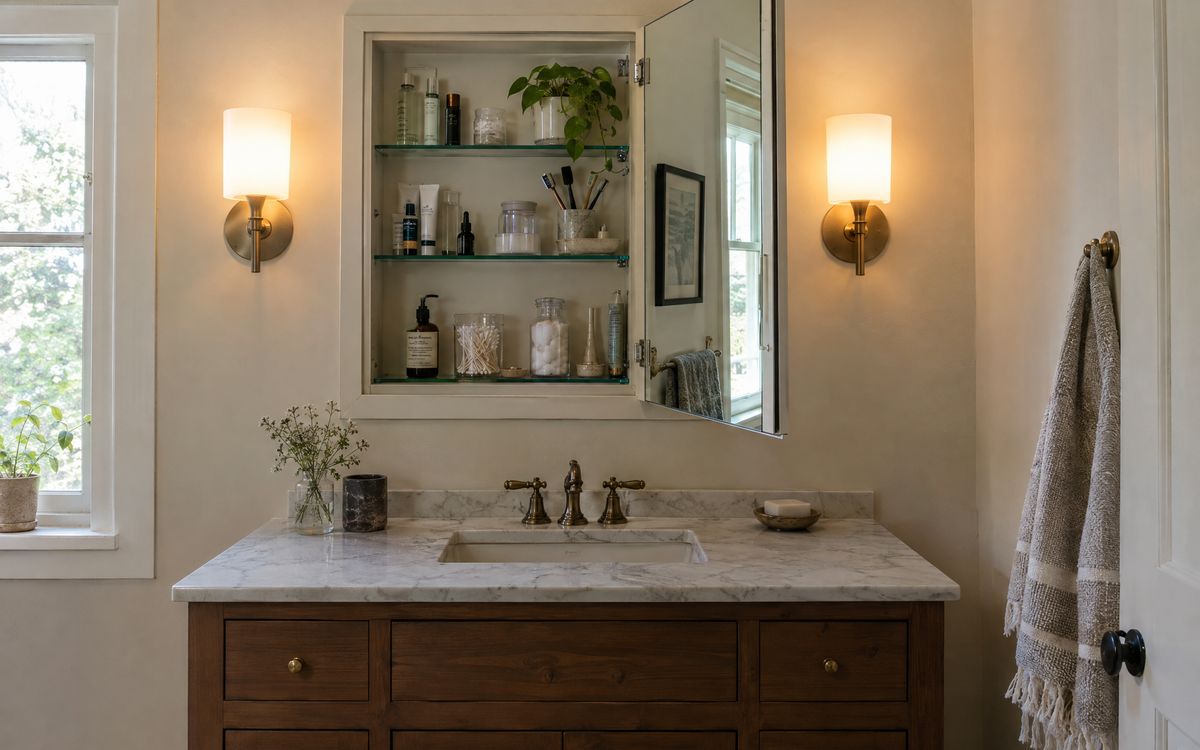
Medicine cabinets are the cheapest storage in a bathroom. The choice is whether to recess it into the wall or mount it on the surface.
01Recessed
Set into the wall between studs, so only the door frame shows.
Pros: clean look, more elbow room at the sink, deeper storage feel. Cons: needs an empty wall cavity, usually about 3.5 to 4 inches deep and clear of pipes, vents and wiring.
02Surface-mounted
Hangs on the wall like a mirror with depth.
Pros: works on any wall, including masonry and walls full of pipes. Cons: projects 4 to 6 inches into the room, which matters over a shallow vanity.
03Checking your wall
In many New York buildings the wall behind the sink holds plumbing risers or is solid masonry. Open a small inspection hole or check drawings before you plan a recessed cabinet. In co-ops, cutting into walls may need approval.
04Partial recess
A cabinet recessed halfway, with a slim frame on the surface, is a good compromise where the wall is shallow.
05Light and power
Cabinets with built-in lighting or an outlet inside for a toothbrush need power to that wall; plan it with your electrician.
06Matching the vanity
A custom vanity and medicine cabinet in the same finish make a small bathroom look designed.
Design both together in the Vanity Worx designer, see finishes, or book a free design visit.