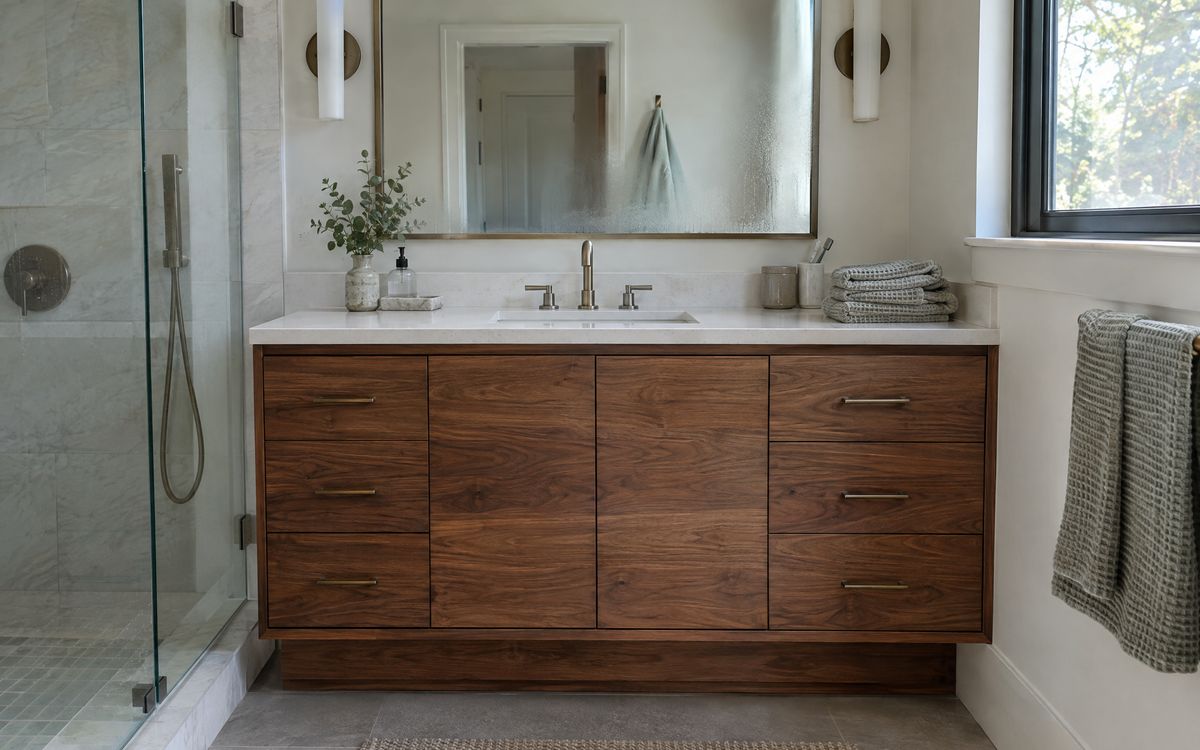
Bathrooms in New York apartments are small and often windowless, so they stay humid after every shower. A vanity built for a dry room will swell and peel. Material choice and sealing matter more here than anywhere else in the home.
01Cabinet boxes
Moisture-resistant panels for the cabinet body, with every edge sealed, are the foundation. Avoid standard particleboard in a bathroom.
02Fronts
- Wood veneer on a stable core: beautiful and stable when fully sealed on all faces and edges. - Solid wood: looks great but moves with humidity; best for frames and small parts. - Lacquer: a sprayed painted finish that seals well and is easy to wipe. - High-pressure laminate: very durable and affordable, with good wood-look options.
03Tops
Quartz is the low-maintenance choice. Marble is classic but needs sealing and gentle cleaners. Undermount sinks need a well-sealed cut-out edge.
04Details that prevent damage
- Leave a small gap under floating vanities so air moves. - Seal the inside of the sink cabinet, where leaks happen. - Use stainless or coated hardware.
05Ventilation
Run the bathroom fan during and after showers. In older buildings with weak exhaust, a quieter, more powerful fan is a good upgrade.
Compare finishes in the finishes catalogue, price a vanity in the Vanity Worx designer, or book a free design visit.